
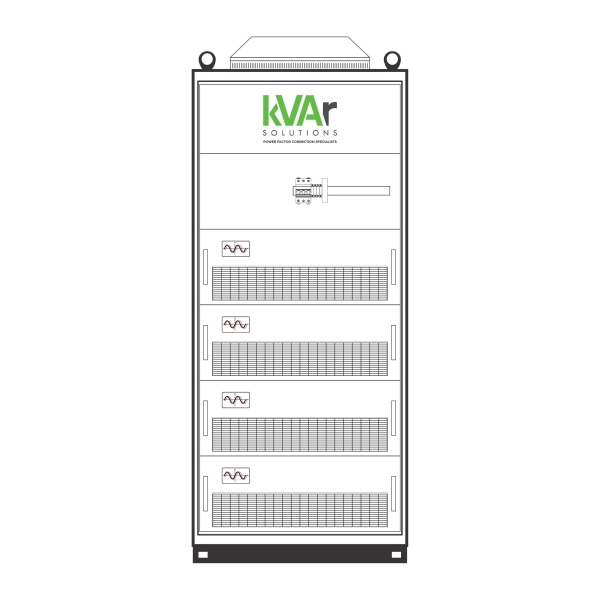
Power factor correction units may reduce kVA demand charges where the tariff, site load profile and correction design support a sound business case.
The opportunity is site-specific. A facility must confirm how demand is billed, measure its electrical conditions and select equipment suited to the load and harmonic environment.
What Are Power Factor Correction Units?
Power factor correction units supply reactive power closer to inductive loads such as motors and transformers. This can reduce the reactive current drawn from the upstream electrical supply and improve the relationship between real power in kilowatts and apparent power in kilovolt-amperes.
Westek supplies power factor correction units within its industrial power-quality range. The equipment should be selected from site data rather than a generic percentage-saving promise.
Can Power Factor Correction Reduce Demand Charges?
It can when the electricity tariff includes kVA demand, power-factor penalties or another relevant charging mechanism. It may not reduce a bill that is based only on kilowatt-hours and kilowatt demand.
Before calculating savings, review:
- recent interval data and electricity invoices;
- the tariff’s demand and power-factor provisions;
- maximum kW, kVA and reactive power demand;
- operating patterns across shifts and seasons;
- major inductive loads and expected plant changes; and
- existing capacitors, switching equipment and protection.
Power factor correction does not turn “wasted energy” into usable power. Its main electrical benefit is reducing unnecessary reactive current in the relevant part of the network.
Why Do Harmonics Matter?
Capacitors interact with the electrical network. Sites containing variable-speed drives, rectifiers or other non-linear loads may require harmonic measurements and an appropriately engineered solution. Installing capacitor stages without considering resonance can create reliability problems.
Detuned reactors may be specified in suitable applications to change the resonant behaviour and protect capacitor stages. They are not a universal add-on. Westek’s explanation of industrial line reactors provides related background, although final selection requires site-specific engineering.
What Should a Proposal Show?
A credible proposal should state the measured baseline, proposed kVAr capacity, switching arrangement, target power factor and assumptions used in the savings estimate. It should also identify enclosure, ventilation, protection, harmonic and maintenance requirements.
Ask how performance will be verified after commissioning. Comparing measured kW, kVA, current and power factor under representative load conditions is stronger than relying on an unqualified promise of rapid payback.
Build the Business Case from Site Data
Power factor correction can be commercially valuable, but only where the electrical measurements and tariff support it. Accurate scoping protects the equipment and prevents overstated savings expectations.
Maintenance must also be budgeted. Capacitor stages, contactors, fuses, cooling fans and connections can deteriorate with age, heat and switching duty. Periodic inspection and measurement help identify failed stages before the site’s power factor drifts. The maintenance plan should reflect the manufacturer’s instructions and the electrical environment, with work performed by appropriately qualified personnel.
Send Westek recent invoices, interval data, load details, single-line information and any harmonic study through its product enquiry channel. The team can help determine whether a power factor correction unit warrants further assessment.