
Westek Electronics compares Active Harmonic Filters vs Passive Harmonic Filters to help Australian sites choose suitable power-quality equipment.
Active and passive filters can both reduce harmonic current, but they work differently and suit different electrical conditions. When comparing Active Harmonic Filters vs Passive Harmonic Filters, the decision should follow site measurements, load behaviour and required performance at the assessment point.
At Westek Electronics, we supply both technologies for Australian commercial and industrial power-quality applications.
Active Harmonic Filters vs Passive Harmonic Filters: The Core Difference
An active harmonic filter dynamically measures and compensates for harmonic current, making it suitable for systems with multiple or changing non-linear loads. A passive filter uses inductors and capacitors designed for specific conditions and is typically installed near equipment such as variable frequency drives or six-pulse rectifiers. Passive filtering can be cost-effective when the load, voltage and system conditions remain consistent.
Neither technology is automatically better. A poorly selected filter can underperform or interact unfavourably with the electrical network, so selection should not be based only on equipment type or purchase price.
Choose Active Filtering for Dynamic or Mixed Loads
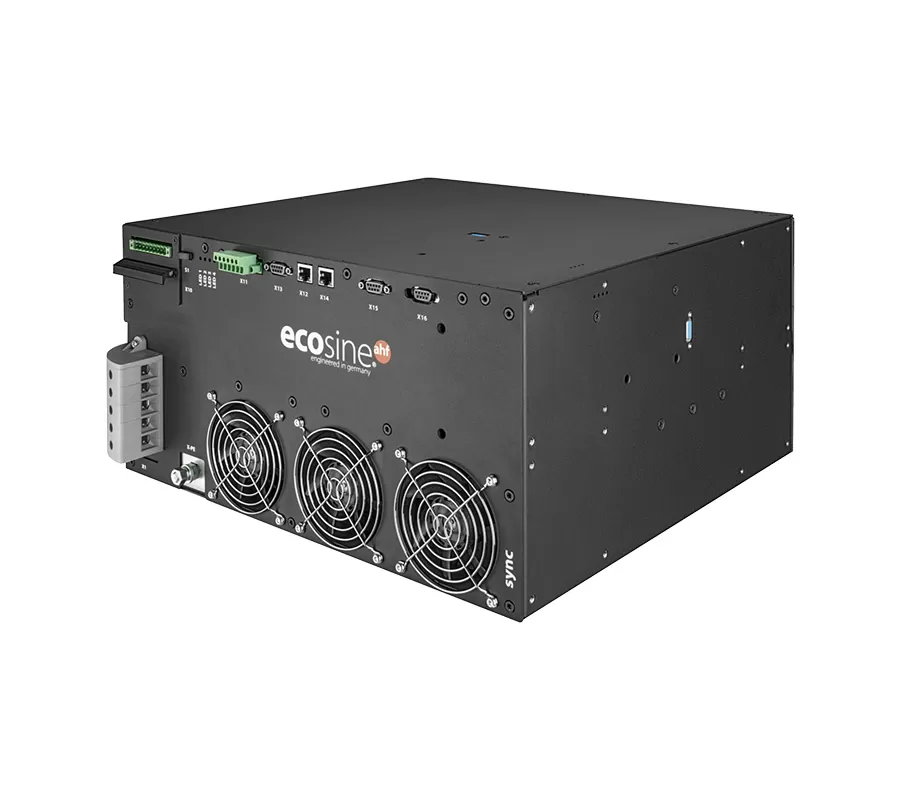
Our Schaffner active harmonic filters use modular Ecosine Active Sync technology for dynamic harmonic mitigation. Available configurations vary by system voltage, wiring arrangement, mitigation current and installation requirements.
Active filtering may suit sites with:
- Variable operation: Loads start, stop or change output throughout production.
- Multiple harmonic sources: Drives, power supplies, UPS equipment and other non-linear loads share a system.
- Central compensation: Harmonics from several loads need treatment at a common point.
- Additional functions: The project requires reactive power compensation, load balancing or flicker compensation.
- Expansion planning: Future equipment changes make a fixed solution less practical.
The filter still needs correct sizing, current-transformer placement, configuration and commissioning.
Use Passive Filtering for Defined Applications
Passive harmonic filters can suit individual drives, or rectifier loads where the electrical characteristics are known. Westek supplies Schaffner passive harmonic filters alongside MTE MATRIX AP and MATRIX E-Series options.
Passive products are not all restricted to one unchanging load point. The MATRIX AP range uses adaptive passive technology and is designed to maintain specified performance across a wider load range than a traditional fixed filter. The MATRIX E-Series is designed for six-pulse rectifier applications, with results dependent on load level and the presence of a DC-link choke or reactor.
Passive filtering may suit projects requiring:
- A dedicated filter for a known load
- Straightforward integration near a drive
- Defined voltage, current and load conditions
- Lower system complexity than an actively controlled solution
Product ratings and manufacturer conditions must be checked before selection.
Measure the System Before Choosing
A power-quality assessment should measure harmonic distortion, load variation, system impedance and the relevant assessment point. Existing capacitor banks, generators, transformers and planned equipment changes may also affect the solution. The IEC technical report on harmonic emission limits confirms that requirements depend on the power system, so applicable Australian standards, network rules and project specifications must be checked.
Request a Harmonic Filter Recommendation
Choosing Active Harmonic Filters vs Passive Harmonic Filters requires more than matching a filter to an equipment list. We can review your voltage, load profile, harmonic measurements, single-line diagram, installation conditions and performance target to identify an appropriate Westek option.
Request a quote from Westek Electronics with your site data and project requirements so we can help narrow the active or passive filter selection.